
Case Summary
Erik Holt didn’t set out to become a test case for the First Amendment.
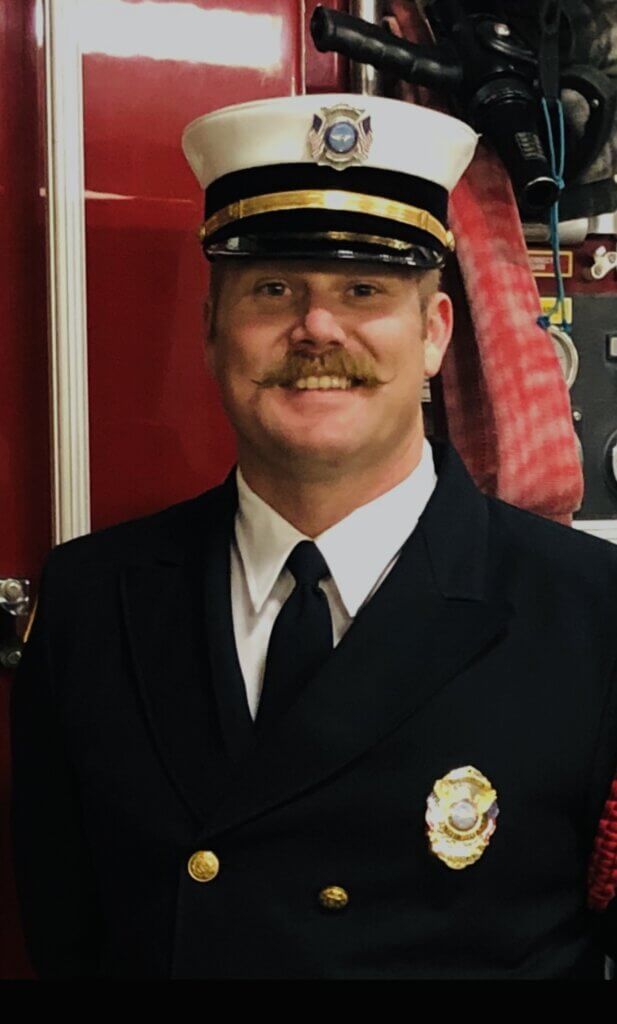
He became a firefighter because he believed in service. Over time, that commitment led him to the role of Fire Chief of the Florissant Fire Protection District in Teller County, Colorado. By April 2022, Holt was serving as Interim Fire Chief. Not long after, he was appointed to the position permanently.
As Fire Chief, Holt was responsible for protecting lives, managing emergencies, and leading with integrity. But in the spring of 2023, integrity demanded something more.
In May 2023, following a contentious local board election, Erik Holt was contacted by a criminal investigator from the District Attorney’s Office requesting footage of the election that was recorded at the fire station. Upon review, it was discovered that the footage contained evidence of potential election fraud and illegal electioneering involving individuals who were about to take control of the District.
This wasn’t gossip. It wasn’t rumor. It was evidence.
Holt faced a choice that many Americans hope they would handle the right way—but few are ever forced to confront.
He could ignore what he saw. Or he could speak up.
Join the Fight
Since 1977, MSLF has fought to protect private property rights, individual liberties, and economic freedom. MSLF is a nonprofit public interest legal foundation. We represent clients pro bono and receive no government funding. Make your 100% tax deductible contribution today and join the fight.
Speaking as a Citizen
Holt chose to act—not as Fire Chief, but as a private citizen.
On his own time and at his own expense, Holt purchased a storage device and retrieved the relevant security footage from a third-party vendor. No one ordered him to do this. It was not part of his job duties. He was not seeking attention or praise.
He simply believed that, as a resident of the community, potential crimes should be properly investigated.
When an investigator from the 4th Judicial District Attorney’s Office approached him, Holt chose to cooperate fully. On his own time and at his own personal expense , he provided material evidence and truthful testimony to assist the criminal investigation into the incoming Board’s conduct. He did what any member of a free society is encouraged to do: he stood as a witness to potential corruption and assisted law enforcement in their search for the truth.
The Sudden Fallout
Just 33 days later, everything changed.
The newly seated fire district board—some of the same individuals implicated by the evidence Holt reported—voted unanimously to fire him.
The reason given? A six-day lapse in the department’s liability insurance, something Holt was responsible for in his role as Fire Chief but lacked the ability to pay for without Board approval.
Holt disputes this explanation. He argues it was a red herring—a manufactured justification used to hide the real reason for his termination: retaliation for speaking out.
The firing was labeled “for cause,” a designation with lasting consequences. Holt lost his leadership role, his professional stability, and his ability to continue serving his community. Worse still, the mark threatens his future employment in fire and emergency services.
Speaking up didn’t just cost him a job. It put his career at risk.
When Public Service Meets the First Amendment
The Constitution is clear: public employees do not lose their First Amendment rights simply because they work for the government.
Supreme Court precedent draws an important line. If a public employee speaks as part of their official job duties, the government may have more control. But when an employee speaks as a citizen on a matter of public concern, the First Amendment protects that speech.
In Holt’s case, the lower court blurred that line.
Because Holt accessed security footage from a system he oversaw as Fire Chief, the court ruled his speech was “employee speech”—even though:
- He acted voluntarily
- He spoke outside of his ordinary job duties
- He reported evidence to law enforcement as a citizen
- He paid for the evidence collection himself from a third-party vendor
If that reasoning stands, it creates a dangerous rule: public employees can be punished for exposing wrongdoing whenever their knowledge is even loosely connected to their job.
That is not what the First Amendment allows.
What’s at Stake?
If Erik Holt can be fired for reporting potential corruption, others will think twice before doing the same.
Firefighters, teachers, police officers, and public workers across the country will learn a chilling lesson: Stay quiet—or risk everything.
The First Amendment was designed to prevent exactly this kind of silence. A free society depends on people who are willing to speak the truth, especially when those in power would rather it remain hidden.
Mountain States Legal Foundation is representing Erik Holt because his story strikes at the heart of Constitutional liberty. Public service should not require surrendering the right to speak as a citizen. The government should not be allowed to redefine “official duties” so broadly that it swallows the First Amendment whole.
This case is about restoring a clear and vital principle: You don’t leave your Constitutional rights behind when you show up to serve the public.
What We’re Fighting For
MSLF is asking the courts to:
- Reverse the summary judgment that wrongly stripped Holt of First Amendment protection
- Send the case to trial, where a jury can decide whether his firing was retaliation disguised as discipline
Erik Holt did what citizens are supposed to do.
Now we’re fighting to make sure the Constitution still protects them when they do.
Oral argument in this case will be held on March 17, 2026.

