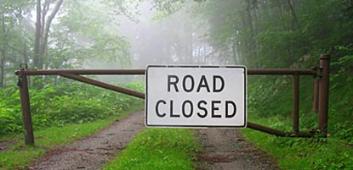
Denver Colorado – June 9, 2021 — One family had been working for nearly 20 years to secure the right to reliably access their private parcel of land within a national forest near the U.S.-Canadian border, when green extremists threw another monkey-wrench into the situation by using “grizzly bear protection” as a pretext for forcing closure of a stretch of forest road that simultaneously improved private property access and bolstered border security.
Environmental extremists had hoped to get two “wins” in one move, by restricting access for private land “inholders” on the Idaho Panhandle National Forest while also hampering Border patrol operations in the area. But they failed on both counts after intervention by Mountain States Legal Foundation, which this week won a ruling that cleared away the roadblocks and handed organized green extremists a double defeat.
MSLF Attorney Corey Bartkus called the ruling “a huge victory” for Continental Lands, Inc. (CLI), the legal entity that owns one inholding, and for “property owners in general.”
Sparking the court case and conflict was a January 2020 joint decision by the US Forest Service and the US Customs and Border Protection to repair and commence maintenance on a 5.6 mile stretch of Bog Creek Road, which connects several Border Patrol stations on the Idaho Panhandle National Forest. The road repair request came from Washington, in response to increased threats posed by an extensive road network just north of the border, which has doubled in density in the last decade.
There was no new roadbuilding involved. Bog Creek Road is already classified as open to restricted use; it simply had fallen into disrepair and was no longer passable. In order to mitigate any potential impacts to grizzly bears and other endangered species stemming from the project, the Forest Service also closed approximately 26 miles of nearby roads to motorized use.
Read more about the Bog Creek Road case by following this link.
In addition to the Bog Creek Road repairs, the joint decision also affirmed the CLI owners’ right to access their property from the east via several Forest Service access roads. Chuck Roady and other family members have been fighting to access their property from this route for nearly 20 years; this decision finally gave them the right of reasonable access they were legally due. Further complicating matters, however, was the fact that the roads in question are located within designated grizzly bear habitat, leading to a lawsuit from Center for Biological Diversity, which challenged the decision on the grounds that it violates the National Forest Management Act and the National Environmental Policy Act.
The gambit ultimately failed, however.
The court granted summary judgment in favor of the Defendants, US Forest Service and US Customs and Border Protection, denied summary judgment for the Plaintiff, Center for Biological Diversity, and dismissed the case in its entirety. The court ultimately found that the agencies complied with the National Forest Management Act and National Environmental Policy Act in developing the Bog Creek Road Project, as they conducted an in-depth analysis and took into consideration the various environmental, national security, and private property interests that may be affected by the Project.
Read the court order opening the closed stretch of road by following this link.
“The Center for Biological Diversity attempted to undermine the Forest Service’s in-depth analysis of the Bog Creek Project which, among other things, provided Continental Lands with unlimited access to its inholding,” said Bartkus. “Thankfully, the Court recognized the hard look that the Forest Service took before proceeding with the project, thereby dismissing the case in its entirety and cementing Continental Lands’ property access rights.”
“We’re grateful to MSLF for this victory on behalf of the private land inholders, the US Customs and Border Protection, and the US Forest Service,” said Chuck Roady, speaking on behalf of Continental Lands, Inc, a family entity that owns an inholding on the forest. “This was a classic example of special interest environmental groups trying to assert control to limit access to both private and public lands, by abusing provisions of the Endangered Species Act.”
Roady says he hopes the win will have implications beyond just the Idaho Panhandle National Forest.
“We should be celebrating our successful recovery of the Grizzly Bear in this area, while at the same time providing necessary access for Homeland Security, land management, and recreational purposes,” said Roady. “Let’s hope that this case is an indication of future legal decisions where the courts are finally recognizing the need to look at the big picture of ESA successes, rather than being side-tracked by misleading litigants trying to misuse the process to promote and advance other agendas.”