

With their reflexively liberal and anti-gun bias, many journalists don’t know what to do with the rise in gun ownership among black women. Trends indicate they’re the fastest growing segment of gun owners in America.
It’s a dilemma for the Left and their legacy media: a favored identity group is stepping out of line on a hot-button issue. According to conventional stereotypes, these women are expected to be lockstep liberals who support strict gun control, not strong advocates and practitioners of armed self-defense.
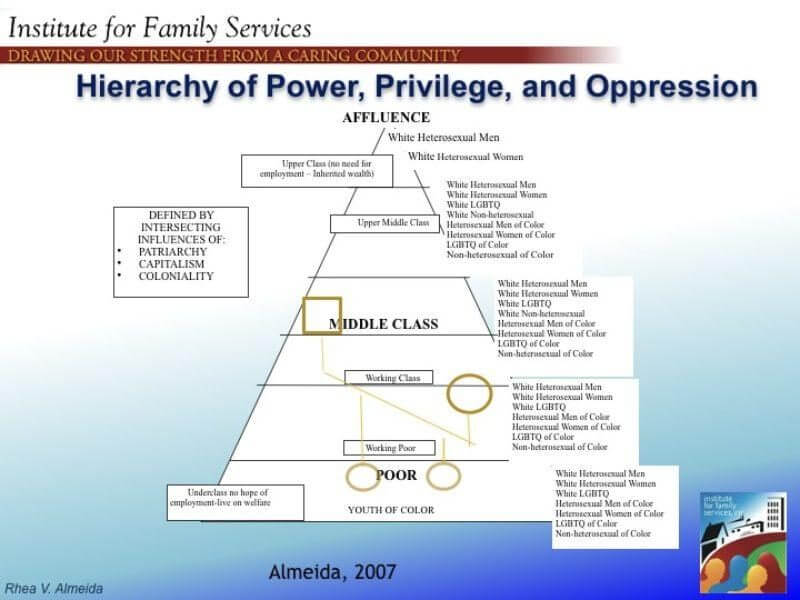
However, due to their high ranking in the hierarchy of identity politics, black women can’t be directly criticized in the mainstream press—even for owning firearms. This puts liberal journalists in a predicament. While conveying their usual anti-gun animus, they must also give the impression of respecting these women.
Schizophrenic Journalism
The dilemma has produced some strangely conflicted media coverage—such as when New York Magazine teamed up with The Trace on an incoherent story that almost seemed to celebrate “The New Face of American Gun Ownership,” before veering into gun control propaganda partway through.
A strange tone was also struck by Peter Jamison’s recent Washington Post profile of newly-armed black women. Straight away, you can see a combination of respectful listening and condescending arrogance. The headline is fair—“Black women who once hated guns are embracing them as violence rises.” But the toxic condescension begins in the subheading: “While research shows that possessing a gun raises the risk of violent death, some Black women are desperate for a way to feel safer.”
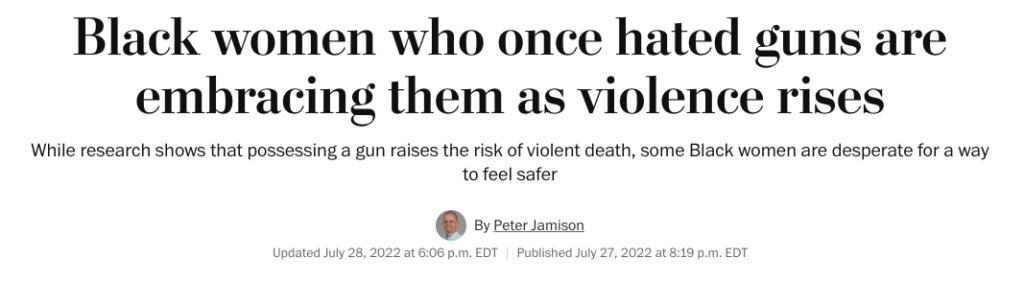
For taking steps to protect themselves and their loved ones, the Washington Post deems the new gun owners “desperate.” Trading in some unfortunate gender stereotypes, Jamison also seems to imply that it’s emotional and irrational for these women to keep and bear arms. All of this is conveyed up front, before the women can speak for themselves.
But as his interviewees know, a firearm is no security-blanket to make us “feel safer.” It’s a tool for protection—often the only effective tool. If anyone comes across as desperate in Jamison’s article, it’s not the gun owners he spoke to. Rather, it’s the anti-gun academics who are quoted in a futile bid to make firearm ownership seem more dangerous than disarmament.
Expert-class Nonsense
Gun control activists like to use data on broad, population-level trends—which can have various explanations and confounding factors—to claim that gun ownership actually increases danger for the individual. This is an apples-to-oranges comparison and a classic abuse of statistics. It’s also, on an individual level, obviously false. The Washington Post cites “experts on gun violence”—who would have us believe that a woman without a gun, begging an armed rapist to spare her life, has made a safer choice than the gun owner able to respond with immediate deadly force.
In Jamison’s piece, a public health professor laments the fact that “a stack of academic papers might not be convincing for a woman who regularly hears gunfire on her street and lives in terror for herself or her children.” Probably not—and that’s how it should be. Everyday Americans can see that liberal academics are out of touch with reality and common sense.
The reality that comes through clearly, even in biased media coverage, is the courage and practicality of the newly-armed black women. With the information they have and the experiences they live, their solutions fare far better than approved “expert” views that deny the obvious. These women are a living challenge to elite opinion-makers in journalism and academia.
Our Natural Rights Unite Us
What concerns our liberal elites the most, in this regard, is losing control of a useful narrative. They would like the public to believe that guns—and Second Amendment advocacy—are for certain groups and not others. Many of our opinion-shapers would like to see guns associated with “whiteness,” “toxic masculinity,” and a particular segment of American culture. Although these stereotypes are false (and deeply disrespectful), they can be culturally potent and politically useful—allowing identity politics to be used in the service of gun control.
But this divisive script can be flipped completely. Rather than being used to divide groups against each other, our shared right of self-defense can provide common ground. We all have a natural right to protect our lives, our loved ones, and our communities with appropriate force—and those who acknowledge this right have a profound area of agreement.
With the rise of armed black women in America, this convergence is already happening. But with the mainstream media’s political agenda—and business model—based on stoking division, don’t be surprised if journalists soon choose to ignore these women altogether.