When the government locks you out of your own land, refuses to compensate you, and tells you to spend years and thousands of dollars just to ask for permission to use what’s rightfully yours—that’s not merely regulating your property. That’s taking it away from you. And it’s unconstitutional.
Mountain States Legal Foundation has filed an amicus brief urging the Supreme Court to hear Doyle v. United States, a case that exemplifies the federal government’s creeping ability to control land without paying a dime for it—and then hide behind red tape when challenged.
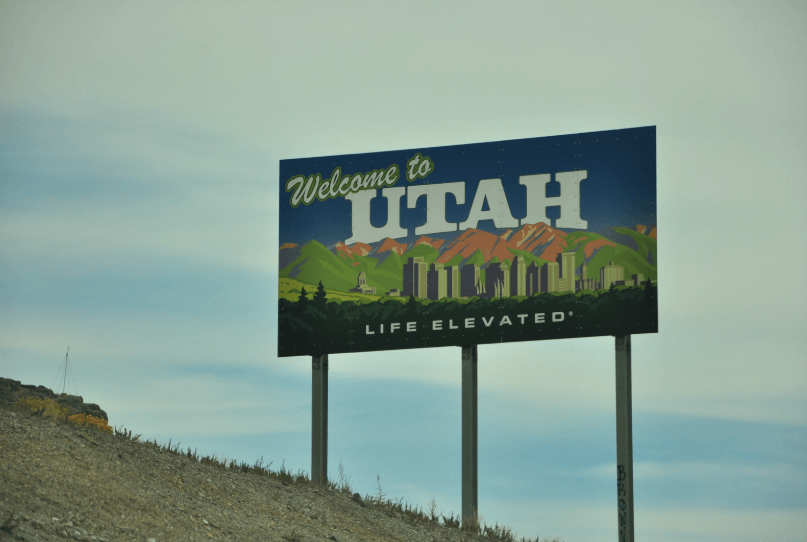
James Doyle is a long-time Utah entrepreneur and small real estate investor. In the late 1980s, he purchased just over 2,400 acres of land right outside St. George, Utah, intending to build housing. But his plans were crushed when the federal government stepped in.
After the Mojave Desert tortoise was listed as threatened under the Endangered Species Act in 1990s, the U.S. Fish and Wildlife Service declared Doyle’s entire parcel as “critical habitat.” The Bureau of Land Management then fenced off the property, locked the gates—and never gave Doyle a key. Federal patrols keep him out to this day.
The result? Doyle has gone bankrupt due to the federal government stripping him of his ability to use or develop his own land. For more than thirty years, he’s been locked out of property he legally owns, unable to build, sell, or earn a single dollar from it. All the while, the government has kept full control, using his land without ever paying him a cent.
This case is a textbook example of two types of unconstitutional “takings” under the Fifth Amendment.
The first is a regulatory taking, where the government imposes such strict rules via regulation that it destroys the value of your land. The Endangered Species Act permitting process, in conjunction with the fencing off of his property, made it practically impossible for Doyle to build or develop anything, thereby ruining his property value. The government left him with land he couldn’t use, couldn’t sell, and couldn’t access. That’s not just regulation—that’s a regulatory taking.
The second is a “per se” taking, which happens when the government effectively invades or controls your land. That’s exactly what happened here—federal agents fenced off Doyle’s property, locked him out, and fundamentally usurped one of the most essential property rights there is—the right to exclude. That’s not just tough luck—that’s a per se taking. The government can’t just take your land and use it like it’s theirs without paying you.
Join the Fight
Since 1977, MSLF has fought to protect private property rights, individual liberties, and economic freedom. MSLF is a nonprofit public interest legal foundation. We represent clients pro bono and receive no government funding. Make your 100% tax deductible contribution today and join the fight.
And then, to make matters worse, the government argues that Doyle’s case isn’t even ready for court until he goes through a lengthy, expensive, and likely hopeless permitting process under the Endangered Species Act. This is the very kind of bureaucratic nightmare that the Supreme Court has already rejected in cases like Knick v. Township of Scott and Pakdel v. San Francisco.
At Mountain States Legal Foundation, our mission is to stop government overreach and defend the constitutional freedoms that every American is guaranteed—especially the fundamental right to private property. The case of James Doyle is a deeply troubling example of what happens when unchecked federal power steamrolls an individual citizen, shutting him out of his own land and then placing justice out of reach.
We filed our amicus brief in this case to urge the Supreme Court to step in, reverse the Federal Circuit’s decision, and reaffirm a simple but critical principle: when the government takes your property, it must pay for it. That obligation doesn’t disappear just because it happens via regulation.
In our brief, we’re asking the Court to confirm that James Doyle’s takings claim is legally ready, or “ripe,” without forcing him to endure a costly and futile permitting process under the Endangered Species Act. We are also urging the Court to recognize that the federal government’s long-term exclusion of Doyle from his own land is a clear taking under the Constitution. And finally, we’re asking the Court to make the United States do what the Constitution requires: either compensate James for the decades he’s been denied access to his property or return the land to him.
What’s at Stake?
If the Federal Circuit’s decision stands, any landowner whose property is occupied by a federal agency could be denied their day in court—unless they first bankroll a hopeless administrative process. That would turn the Fifth Amendment from a self-executing protection into a bureaucratic privilege.
What’s at stake is the right to exclude others from your property—the most fundamental aspect of ownership. If federal agencies can seize control without compensation and hide behind red tape, then that right disappears for millions of Americans.
A win in Doyle would be more than personal justice for a man who’s waited 30 years to use his land. It would be a shot across the bow to federal agencies that think they can fence out private citizens, avoid paying for it, and use paperwork to dodge accountability.
It’s time to reaffirm that constitutional rights don’t stop where federal regulations begin.
Supreme Court Update
Unfortunately, on May 19, 2025, the Supreme Court declined to hear this case.

