
Melissa and Aaron Klein are practitioners of the American Dream. In 2007, they opened a bakery called “Sweet Cakes by Melissa” in Gresham, Oregon. The shop was a staple in their community. They worked hard every day, rising early in the morning, striving to create specialized, custom-designed, and artistically crafted cakes. For the Kleins, however, they didn’t just bake ordinary cakes, and this was no regular business.

For them, Sweet Cakes was a channel for them to express their creativity, celebrate marriage, and give a voice to the values they hold most dear. These values are why they never baked cakes that were profane, celebrated divorce, or advocated harm to others. And as Christians, they believed designing cakes for same-sex weddings was a part of those expressions that went against their artistic, expressive, and deeply held values.
But for the state of Oregon, wielding the mighty hammer of bureaucratic control, anyone who dared object to celebrating same-sex weddings was an enemy of Oregon’s twisted version of nondiscrimination and must be punished. Unfortunately for the Kleins, faced with financially crushing fines of tens of thousands of dollars after refusing to bake a cake for a same-sex wedding, they were forced to close Sweet Cakes.
Now, after a long route through state courts, one decision of the Supreme Court of the United States, and coordinated hostility from the insatiable mob of the Internet, the Kleins are going back to the Supreme Court to try to get the justice they were so ruthlessly denied.
Case Background
The question of whether businesses like Sweet Cakes should be compelled to provide services they disagree with started when Jack Phillips of Lakewood, Colorado, refused to design and create a cake for the wedding of two gay men. For him, much like the Kleins, decorating cakes wasn’t just a business, but a form of art he used to express his closely held Christian values. Creating a cake for a same-sex wedding would violate those values.
While the Supreme Court in Masterpiece Cakeshop v. Colorado Civil Rights Commission found in favor of Jack, the justices did not settle the question of whether or not baking cakes (and other similar bespoke services) is a protected form of speech under the First Amendment. Their decision in favor of Jack was made on the basis that the state of Colorado was biased and did not apply the law neutrally to his bakery. In a concurring opinion, Justice Clarence Thomas laid out the strong case that the First Amendment did indeed protect Jack Philips’ artistry completely.
Now that Melissa and Aaron are back before the highest court in the land, the justices have an opportunity to once and for all protect the First Amendment and prevent governments from compelling the speech of business owners.
Mountain States has joined the effort to support the Kleins by offering an amicus curiae brief. Where so many are focused on the religious liberty of the former bakers (and rightly so), Mountain States offers the strongest argument for why the subject matter of the speech—convictions informed by religion—is irrelevant. Speech is speech, and should always be protected. Religion is not the backstop to the First Amendment—citizens can refuse to speak simply because they do not want to.
Anyone can speak through their art. The Court has considered many art forms to be protected under the First Amendment, such as paintings, sculptures, films, and photographs. Other courts have gone so far as to protect unique art forms such as tattooing. MSLF argued that components of custom wedding cake artistry—such as painting and sculpting—are already protected art forms in different mediums. Just because the medium is edible does not mean the First Amendment’s protections are any less important.
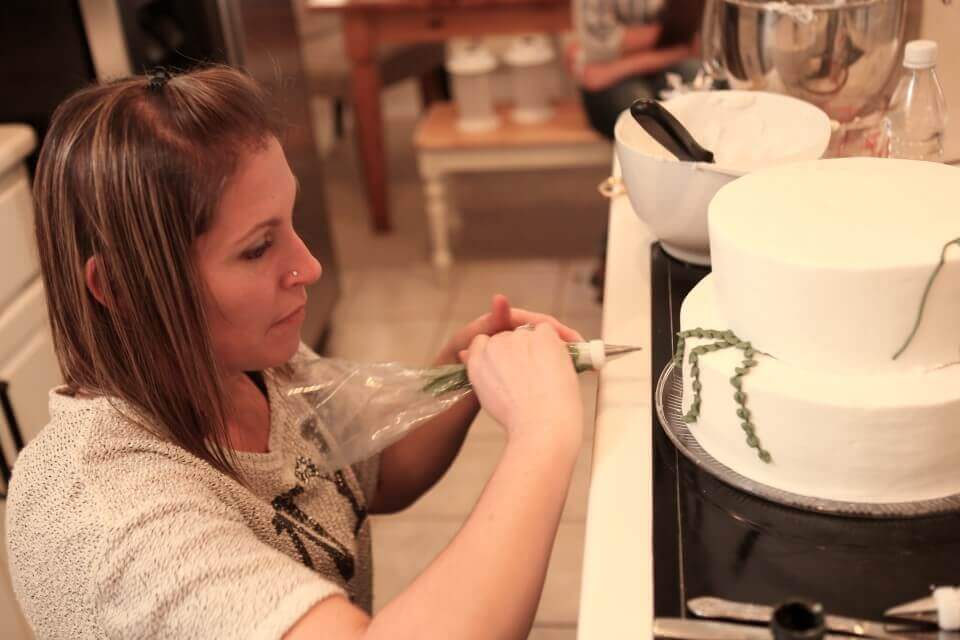
Artists have the right to speak and not speak as they see fit. To compel speech—using the force of state power—is unconscionable. Imagine facing hefty fees or even jail time for failing to paint a painting or sculpt a sculpture that violated the very fiber of your being. That’s what Oregon did to the Kleins.
But art cannot be restricted to some traditional sense of the word. Are not architects as much creative souls as they are engineering professionals? Are hair stylists not weavers of fashion as they are providers of hygienic services? Website designers, carpenters, caterers—and yes, bakers—are all artisans, complete with unique voices they express through their creations. The fact that they sell these creations to the public does not reduce their voice and their art. It does not make their work “un-speech.”
Oregon, like many state governments, has a public accommodations law that prohibits discrimination on the basis of sexual orientation. If interpreted broadly, that can mean artisan businesses like cake makers must be forced to “bake the cake” against their will and deeply held values. This is exactly what happened to Melissa and Aaron. The commissioner of the Bureau of Labor and Industries—or BOLI, Oregon’s machine for persecuting speech that bureaucrats deem “hateful”—disparaged the Kleins’ religious beliefs, and suggested that they were mere “excuses” for discrimination, and weren’t serious. Such beliefs, the commissioner said, needed to be rehabilitated.
Join the Fight
Since 1977, MSLF has fought to protect private property rights, individual liberties, and economic freedom. MSLF is a nonprofit public interest legal foundation. We represent clients pro bono and receive no government funding. Make your 100% tax deductible contribution today and join the fight.
What’s at Stake
The Kleins were forced to shut their doors and squash their American Dream of handing down their hard-fought work to their five children. If a commissioner in Oregon can do that to bakers, imagine what an entire federal government could do with the wrong people in office. The government, using the veil of “anti-discrimination law,” is attempting to define what is and is not art. They’re trying to dictate what is and is not protected speech. The Founding Fathers would be rolling in their graves at such a narrowing of the First Amendment. They’d be appalled at the puppeteering of the American people.
If such bureaucrats are to be held accountable, Americans must protect speech at every possible opportunity. Whether speech is religiously motivated or not, whether it is verbal or not, does not matter. A person expressing himself or herself is so fundamentally human, we can say that speech is a natural, human right. Supporting the Kleins isn’t just about a cake—it’s about every form of speech that can be conceived.
Case Timeline
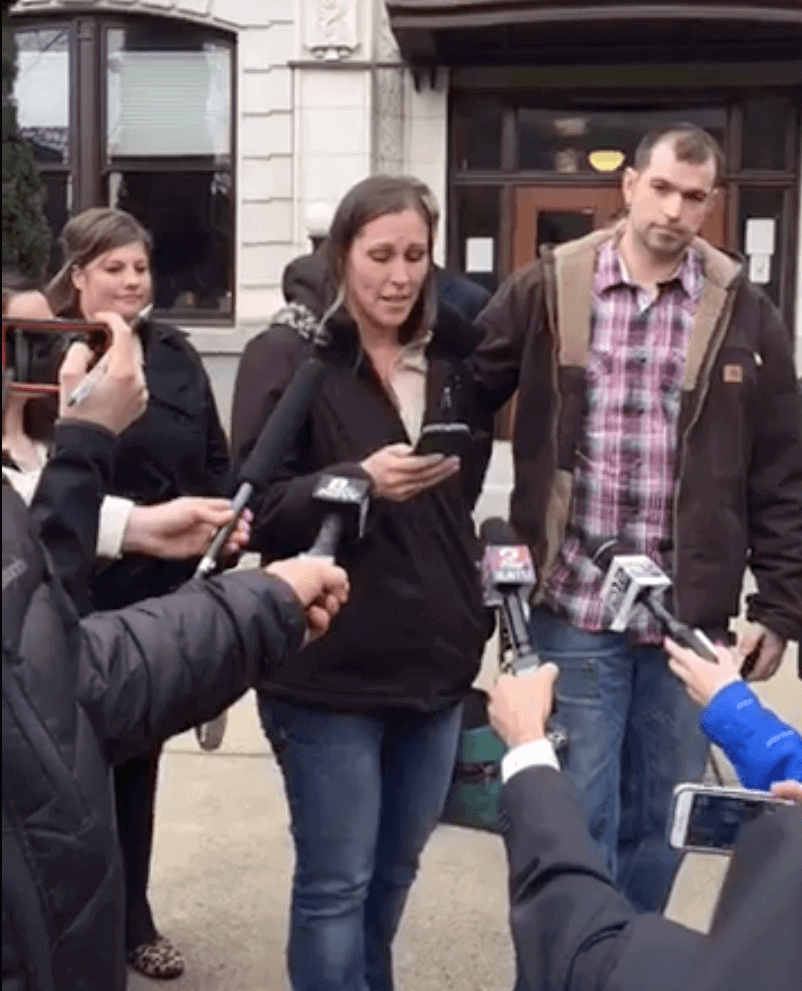
- January 2013: The same-sex couple for whom the Kleins refused to bake a cake filed a complaint with the Oregon Bureau of Labor and Industries (BOLI).
- September 2013: After months of being harassed by the news media and mobs, the Kleins closed the Sweet Cakes storefront.
- April 2015: BOLI investigated and issued formal charges against the Kleins for violating Oregon’s public accommodations law, and assigned the case internally to one of its own “administrative judges,” who rejected any free speech or free exercise defenses. The administrative judge found in favor of the couple, and BOLI sought damages of $135,000.
- July 2015: The commissioner of BOLI confirmed the administrative judge’s decision.
- December 2017: On appeal, the Oregon Court of Appeals affirmed the award of damages, rejecting Melissa and Aaron’s constitutional claims.
- June 2018: The Oregon Supreme Court denied review of the case, thus upholding the damages.
- June 2019: The Kleins appealed to the Supreme Court of the United States, which vacated the Oregon Court of Appeal’s decision, and remanded the case for further consideration in light of Jack Phillip’s victory in Masterpiece Cakeshop.
- January 2022: On remand, the Oregon Court of Appeals again rejected the Kleins’ First Amendment defense, finding that—unlike in Colorado—BOLI was neutral in applying the public accommodations law, despite the commissioner’s disparaging remarks.
- May 2022: The Oregon Supreme Court again denied review of the case.
- October 2022: Melissa and Aaron Klein have petitioned the Supreme Court of the United States to issue a writ of certiorari so that the Court may review the case and decide if the First Amendment applies to bespoke services like cake bakers.
- Mountain States Legal Foundation, in support of the Kleins, filed an amicus curiae brief in support of the petition for certiorari.
The writ of certiorari was granted. The judgement of the court above was again vacated and remanded back to the Oregon Court of Appeals for review with consideration of 303 Creative v. Elenis.
All images courtesy of First Liberty
