Environmental activists’ latest scheme puts property owners and the public at risk… and puts bears in harm’s way
Some environmental groups just never give up trying to make things harder for property owners. But recently, Western farmers and ranchers won a major legal victory, one that resonates for all Americans who value property rights.
The case is called Center for Biological Diversity v. Haaland. It was initiated by an anti-growth environmental group called the Center for Biological Diversity (CBD). You need to know about CBD because they are known for litigating against private property rights, especially against ranching and farming.
With their latest lawsuit, CBD tried to gain significant new power to lock up vast areas
of federally managed land, even private land, through endless litigation. Their hope was to gain the power to sue over species’ recovery plans—starting with the grizzly bear. CBD even tried to force the federal government to restore grizzlies to the Grand Canyon area. Watch out, tourists!
Fortunately, the United States District Court for the District of Montana saw through CBD’s power grab. Attorneys with Mountain States Legal Foundation intervened in the case, challenged CBD directly in court, and exposed their faulty case for what it was. In the end, the judge called
CBD’s legal arguments “circular and therefore unpersuasive.”
Because ranchers and farmers across the American West would have potentially lost the use of millions of acres of federally managed grazing lands, a loss in this case would have financially devastated the very individuals who are critical to our nation’s food supply chain. By suing to cripple farming and ranching, CBD showed their true colors. Our nation’s food supply chain takes a back seat to their anti-growth agenda.
This victory came just in time.
Like other environmentalist groups, CBD frequently files lawsuits to delay the implementation of policies they don’t like. Had they succeeded here, CBD
would have gained countless new opportunities to file such lawsuits by increasing the bureaucratic morass in Washington D.C., thus locking up species management and the land those species may (or may not) inhabit for years or even decades in federal court. While this case directly involved the grizzly bear in the lower 48 states, a loss in this case would have opened the floodgates for new litigation over hundreds of other species as well.
The ruling was cheered by our clients, Wyoming Stock Growers’ Association, Wyoming Farm Bureau Federation, and Utah Farm Bureau Federation.
“In recent years, it appears that the radical environmental community sees every action by a federal natural resource agency as an invitation to litigation,” said Jim Magagna, Executive Vice President of the Wyoming Stock Growers Association. “This attitude only serves to discourage local collaboration that truly fosters species recovery and protection while maintaining viable ranching operations that provide
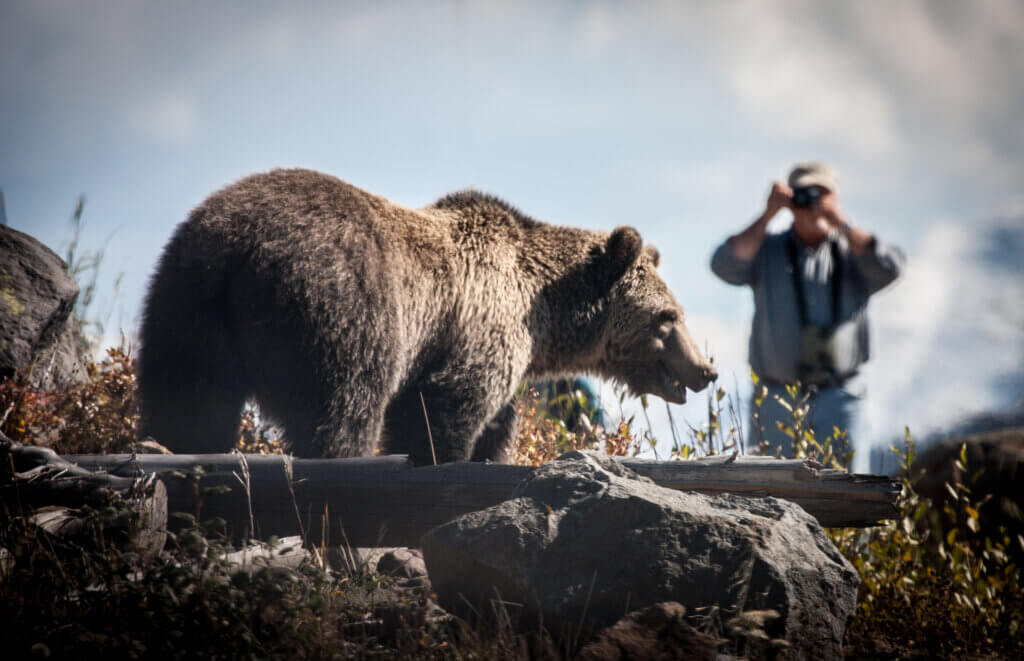
Environmental activists tried to gain significant new power to lock up vast areas of federally managed land. They even tried to force the federal government to restore grizzlies to the Grand Canyon area.
Thanks to this significant victory, state and federal agencies can continue to tailor species recovery efforts in a manner that’s most efficient and effective. Recovery plans won’t be locked up in the same vicious cycle of unending litigation. That’s not just important for ranchers and farmers whose livelihoods and fortunes depend on a functional and predictable public process; it also benefits the species being recovered. And isn’t that what self- styled grizzly advocates say they want?
CBD has appealed their loss, but MLSF will continue fighting in court to ensure they do not gain the power they seek to control the land and the lives of the American people.
Key Facts
Case: Center for Biological Diversity v. Haaland
Court: U.S. Court of Appeals for the Ninth Circuit

Who’s Fighting for You?
William E. Trachman recently joined MSLF as Associate General Counsel after serving in the Trump Administration. He is our lead attorney for this case.
What’s at Stake:
Environmental activists are suing for vast new powers to push forward with their anti-growth agenda. They do not respect your property rights and want greater control over public lands. We are fighting them in court to uphold your rights.

