On the road in Wyoming, looking for Joe Biden’s ‘privileged’ white ranchers who were denied debt relief due to their race
White farmers and ranchers presumably have had it made in the shade, according to President Joe Biden and Agriculture Secretary Tom Vilsack. As hard as it is to believe, the Biden Administration explicitly excluded white farmers and ranchers from a COVID-19 farm relief package that forgives up to 120% of federal farm loans. Someone forgot to tell Biden that the COVID-19 pandemic didn’t discriminate when it shut down the country and the American economy.
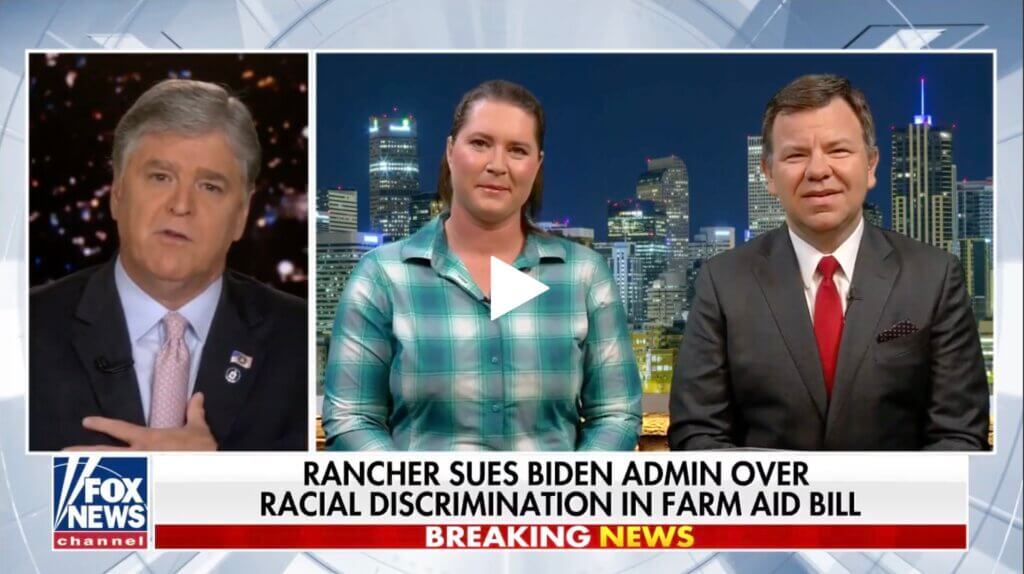
Many white farmers and ranchers have understandably felt stung by a move that is unfair, insulting, and blatantly unconstitutional. Mountain States Legal Foundation has teamed up with Southeastern Legal Foundation, based in Atlanta, and filed multiple lawsuits in response. Thus far, we have succeeded in halting the plan preliminarily until the judge can make a final determination regarding the constitutionality of the program. Already, the judge has said that we are likely to succeed in the case.
You might be shocked that the progressives in Washington would be so overt with their racial bias in order to achieve so-called “equity.” Behind their actions is the assumption that white ranchers and farmers somehow aren’t in need of debt relief while non-white farmers are. I decided to investigate the validity of this assumption during a recent trip to Wyoming by dropping in on our client, Leisl Carpenter. Leisl is a sixth-generation Wyoming rancher. We’re suing the Biden Administration on her behalf.
What I found during a daylong visit with the family did not fit the picture of “white privilege” that the progressives in the Biden White House are fond of touting.
First, I had to find the place known since 1894 as the Flying Heart Ranch. It’s nestled in a sea of green that runs right to the base of the Snowy Range, perhaps three miles away. Don’t even try to use GPS to get there.
Under towering cottonwood trees sits the ancient chink log homestead, built with hand-hewed timbers sledded down from the mountains by Leisl’s great-great-grandfather. A pleasant, sturdy, no-nonsense ranch house was added in the late 1940s, anchored on one side by an awesome stone chimney. The modest trailer where Leisl and an older brother were raised after her parents returned to the ranch in the 1980s is where her mother, Dee-Dee, still lives today.
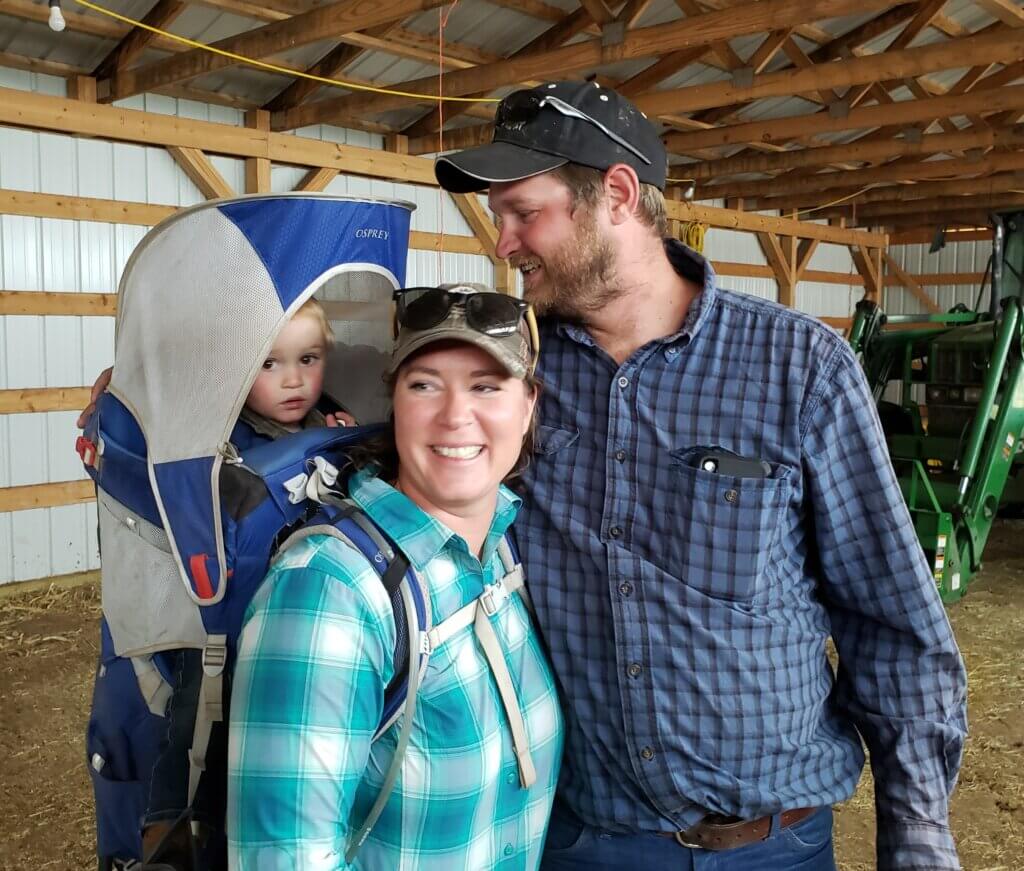
Upon arrival, I’m greeted by the family dogs and two very contented bay horses that seem to wander the grounds at will. Leisl herself then appears, with her son, Casen, under one arm, followed by her tall and rangy husband, Tim. They greeted me like an old friend, even though I work in communications at a Denver law firm.
Leisl and Tim looked younger than I imagined. But youth is no defense from challenging circumstances. The responsibility of running the Flying Heart Ranch fell to them suddenly, and tragically, when Leisl’s grandparents died within hours of each other in 2009—the grandmother of a sudden aneurysm, and the grandfather of an apparent broken heart after being told by doctors that there was no hope for his wife.
What I found during a daylong visit with the family did not fit the picture of “white privilege” that the progressives in the Biden White House are fond of touting.
Suddenly, though not yet a high school graduate, it was up to Leisl to fight for the Flying Heart’s survival, which has been a touch-and-go struggle since the day it was founded. What fell to her care wasn’t some vast ranching empire but a family-run outfit that had weathered hard times and showed the scars. Much of the equipment was broken down. The buildings and fences needed work. The former “herd” had dwindled to just seven animals, which Leisl began collecting as pets – never imagining that they would someday form the nucleus of the total rebuild she would attempt. She also inherited a mountain of farm debt from her grandparents, which sometimes loomed almost as large as the peaks that rose above the pastures.
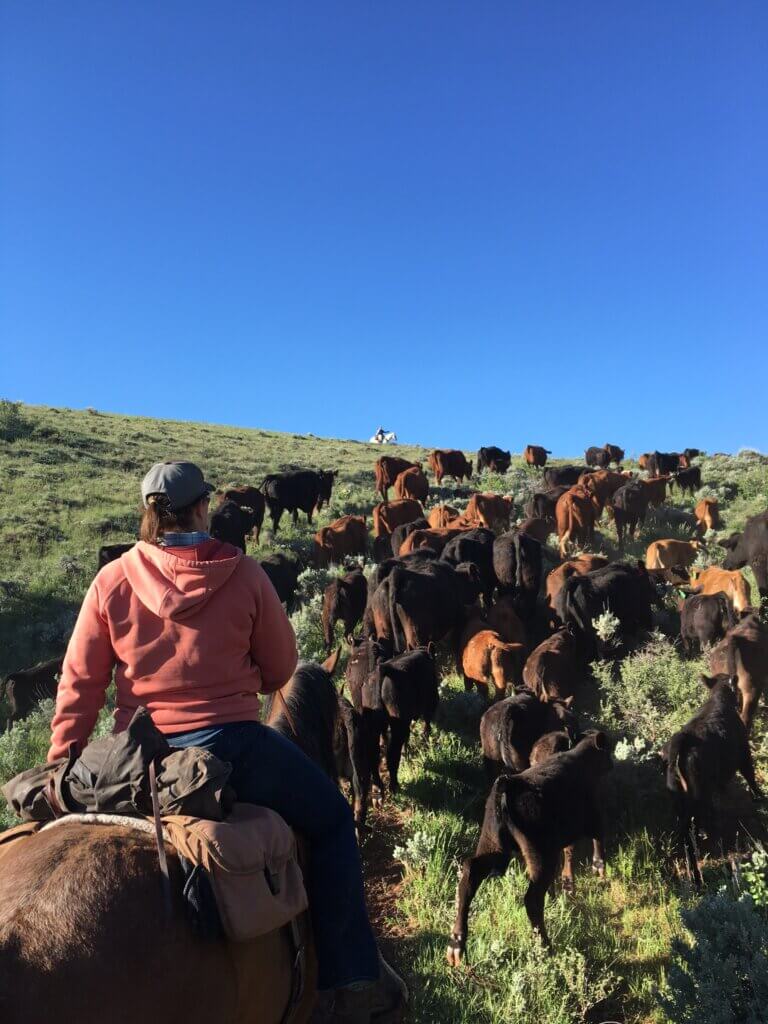
Leisl was raised on the ranch. Tim, on the other hand, was a “city kid” who dreamed of being a cowboy but had little experience until his courtship of Leisl also made him a voluntary ranch hand. Taking charge of the outfit was a huge responsibility for two teenagers. The first time they tried haying the place themselves was a backbreaking nightmare, which could have crushed most folks, but only cemented their resolve to make it work, no matter what.
“We just don’t want to be the generation that loses the ranch,” Leisl told me, recalling what it was that kept them keeping on. “What really drove Tim and I then, and what still drives us today, is a determination to keep it all going and keep it in the family. And failure just isn’t an acceptable option.”
Leisl took out the first federal farm loan in the outfit’s long history in 2011 to stave off foreclosure. The loan allowed them to upgrade some of the decrepit equipment and consolidate the debt into a more manageable bundle. But the debt still had to be paid, by whatever means necessary.
Survival meant doing anything and everything to stay afloat. Tim acquired butchering skills and hired himself out as a guide. They did the haying for neighbor ranches and rented out spare pasture. They became distributors for animal protein supplements, hired themselves out to other ranches as day laborers, and began selling their grass-fed beef directly to consumers on a small scale.
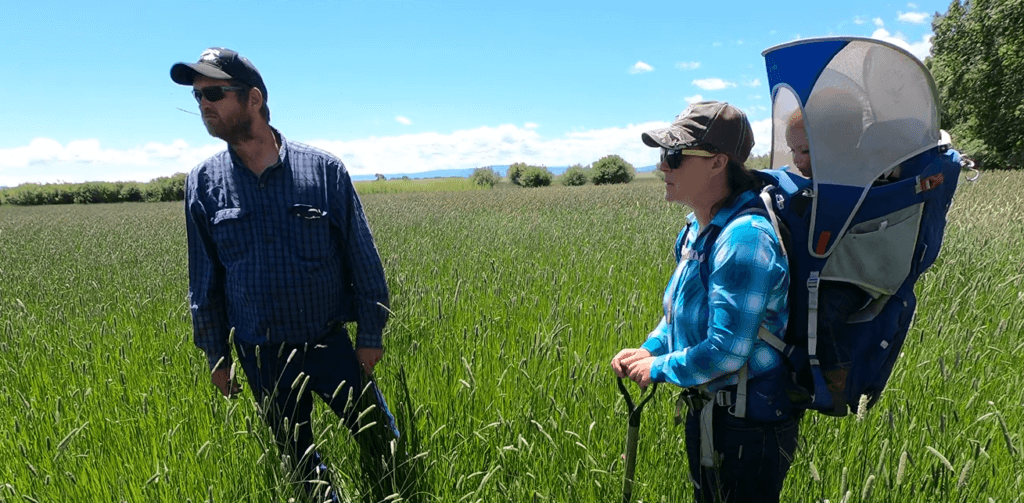
Ranching is not an easy life. They learned the painful way that unvaccinated calves die, that hay harvested at the wrong time can mold and rot; that a mistake when diverting precious water could be disastrous. Natural calamities like drought and wildfire also took a heavy toll.
I was hard-pressed to see their so-called “white privilege.” It’s clear they work as hard and against as many odds as any other rancher while also fulfilling an essential role in our nation’s critical food supply chain.
Eventually, of course, came the COVID-19 lockdown, which threw the cattle market into chaos, broke critical links in supply chains, and sent the economy into a dive. It was financially devastating. Other ranchers they knew lost their land and homes.
Leisl and Tim didn’t believe it when they first heard rumors that the $4 billion in COVID-19 farm debt relief Congress approved wouldn’t apply to them—for no other reason than that they happen to be white. When the rumors were confirmed, Leisl resolved to do something about it, not just for her own sake but for numerous other ranchers who also needed help but were denied because of the Biden Administration’s racial discrimination. She had heard her grandparents talk about Mountain States Legal Foundation so she called us for help. With MSLF by her side, Leisl decided to pick up her sling and take on the government Goliath.
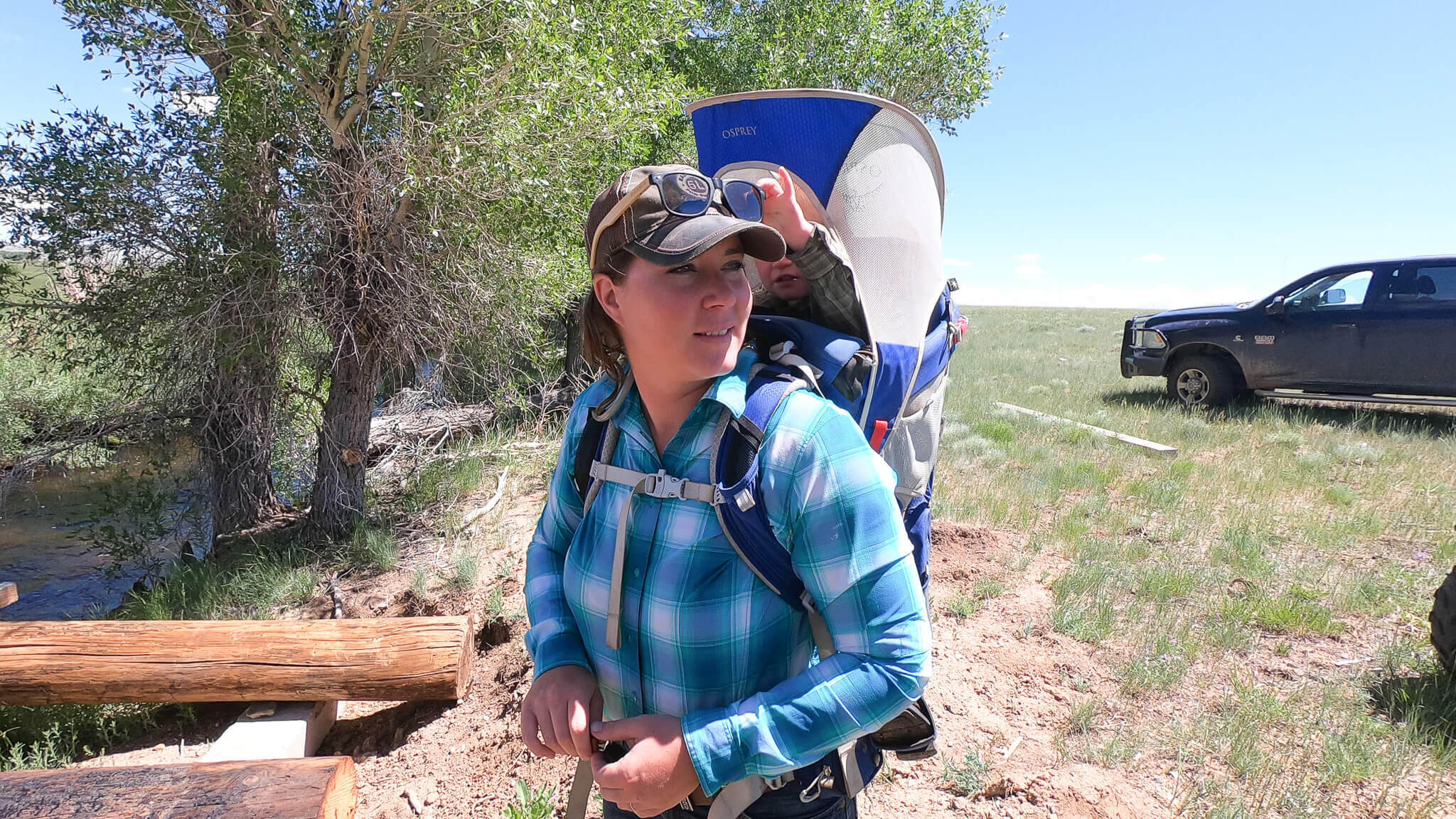
Standing in the ranch house kitchen, with son Casen comfortably stashed in a backpack-style baby carrier, Leisl tells me that it was with Casen in mind that she decided to take action, even if she risked becoming a target for hatred and vitriol for daring to take a stand. “I envisioned my son’s future if I sat here and did nothing, and I didn’t like what I saw,” she told me. “I knew I had to stand up because I want him growing up in a better world, a more just world, where he’s equal, I’m equal, and every single person is equal because that’s what the United States flag is all about.”
Sean Paige is the Director of Communications for Mountain States Legal Foundation.
Key Facts
Case: Leisl Carpenter v Tom Vilsack and Zach Ducheneaux
Court: U.S. District Court of Wyoming

Who’s Fighting for You?
General Counsel, William E. Trachman, recently joined MSLF after serving in the Trump Administration. He is our lead attorney for this case.
The Biden administration signed the American Rescue Plan Act of 2021, providing $4 billion to forgive loans for socially disadvantaged farmers and ranchers. But white farmers and ranchers are excluded. It’s plain, ugly racial discrimination.
Click here to defend the Constitution and support Leisl’s lawsuit against the Biden Administration.