
Whenever we think about endangered species, thanks to decades of successful messaging, we usually think in terms of, “What have humans done to threaten the extinction of an animal?” Despite the fact the Endangered Species Act’s (ESA) own framework considers more than human activity as a factor in population decline, this is the mantra repeated by environmentalists every day. Sometimes, though, animals become endangered from other threats that are not man-made. Disease, natural loss of habitat, or some invasive species can also contribute to endangerment. Identifying these threats is an important part of protection and recovery, the dual goal of the ESA.
As we turned the ESA’s framework on its head last week, we’re doing the same for identifying threats to the Other Endangered Species—the Free American. Protecting and recovering Free Americans and their habitat is our goal at Mountain States Legal Foundation, so we’re asking some questions to find out the biggest dangers to life, liberty, and the pursuit of happiness. We will expand on the questions below in the coming months as we build out the theme of the Endangered Free American.
Question 1: What are the Free American’s predators?
The nature of the Free American is a spirit of liberty—to live one’s life unmolested by another, doing no harm to their fellow man. Our framework outlined last week reveals the Free American comes in all shapes in sizes: Ranchers who feed our nation; bakers who use their skills as expressive art; aspiring professionals who hope to be considered for their merits and not their skin color; former teachers looking to build their own tools of self-defense; and so many others fall under our list of the Other Endangered Species.

The most dangerous predators are those who devour liberty and who aim to quell the spirit in pursuit of their own agenda. The question we ask here could be better phrased, “Who tramples upon liberty the most?”
On the whole, the most effective predator against individual liberty is Big Government. With an army of unelected bureaucrats who are barely accountable to the people’s legislators, Big Government thrives on regulating and hampering the day-to-day lives of Free Americans. The mantra of this predator is summarized in a Ronald Reagan quote: “If it moves, tax it. If it keeps moving, regulate it. And if it stops moving, subsidize it.”
Question 2: Who is poaching the Free American?
If Big Government is the Free American’s predator, who or what is the poacher, the illegal hunter who would pursue their prey into extinction?
We like to call them Colluders because their work directly benefits Big Government. You’ve probably heard of some Colluders in Mountain States’ work. We see them all the time.

One of the most frequent Colluders we run across are environmental litigation organizations like the Center for Biological Diversity (CBD) and others. These organizations are extremely litigious organizations that have found a niche by weaponizing the courts to badger and suppress property rights. In one case (which we recently just won), the CBD attempted a power-grab over the recovery process of endangered species. You can read about it in our news piece, but the bottom line is this: had the CBD been successful, they would have opened wide the floodgates to judicial review of every recovery plan change the CBD ever wanted to propose. Their goal was to force government agencies like the Fish and Wildlife Service into settling on CBD’s terms, or risk litigating a thousand cases.
The Center for Biological Diversity is just one example of the Colluders. We see them in all of our practice areas, including our Second Amendment work. Their methods are poaching Free Americans of their rights to property, free speech, keep and bear arms, and equality under the law.
Question 3: What is the Free American’s habitat, and what is reducing it?
This is perhaps the simplest question of all. The habitat of the Free American is wherever the Constitution of the United States is properly applied.
On its face, that should be every courtroom in the country. The Constitution is the supreme law of the land, and upholding the rights enshrined in it is the oath and duty of every legislator, lawyer, and judge in the nation.
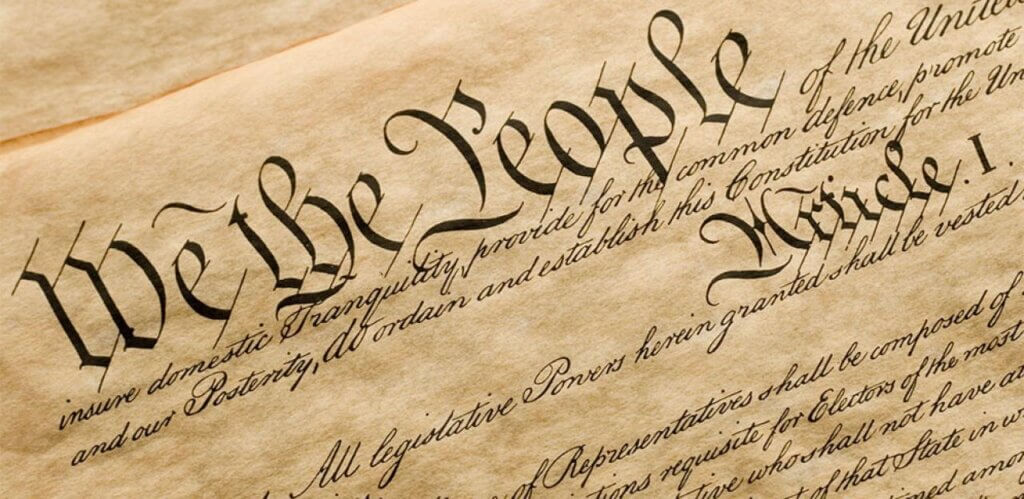
But the habitat is shrinking. Especially over the course of the 20th century, we saw judges at the highest levels of the judiciary abuse and ignore constitutional language and interpret our charter in novel and dangerous ways. The ramifications have leaked into the 21st century as state legislators and federal bureaucrats alike, emboldened by such decisions, threaten the rights of everyday citizens.
Where the Constitution as written should be applied has dramatically shrunk since it was ratified in 1789. The habitat of the Free American has dwindled—restoring it is the chief work of Mountain States.
Question 4: What regulations or lack of protections contribute to the Free American’s decline?
An answer to this question would take volumes to list every municipal ordinance, state law, federal statute, bureaucratic regulation, and judicial decision that threatens the Free American. An easier question would be what contributes to the recovery of the Free American?

If liberty is at the heart of the Free American, the Constitution is the surest way to protect it. However, as we see the dwindling habitat from our previous question, we must be careful how we approach the document.
The Framers of the Constitution set out to chart a document that would establish an ordered liberty for a new nation. The language they used expressed such ideas in a specific way for a specific time. To understand the true meaning of the Constitution’s words we have to understand the language of the time it was written and adopted. This is the core principle of originalism.
An originalist interpretation is the best way to not only understand the more objective meaning of the Constitution, but our best chance at defending the rights within it.
Question 5: What factors—such as political movements or public sentiments—threaten the Free American?
This is a difficult question to answer because the answer lies deep within the American citizenry itself.
Mountain States is not a partisan organization—liberty knows no party, and the Free American deserves to be protected regardless of creed or political position. That said, there can be no denying a disturbing trend of progressivism within mainstream political thought.

Whether in traditional media, social media, public schoolrooms and lecture halls, clubs, sports, churches, and so on, there appears to be a growing trend to abandon our civil society to government action. Where Americans once relied on themselves and each other to solve their problems, they now automatically turn to city hall, the state capitol, or Washington, D.C., for solutions.
I think the spirit of the Free American—the spirit of liberty—is still well alive to this day. At the core of each individual is a raw sense of, “I want to live my life, and I don’t want someone to control me.” Conversely, because no one is perfect, there is also a reactionary sense of, “They shouldn’t be allowed to do that—someone should stop them!” There’s a knee-jerk need to control what we don’t like.
Mountain States is a law firm, and we do our best work in legal briefs and before judges. And yet, we are not content to sit on the sidelines while we hope the spirit of liberty wins over the spirit of control. It is vital that each of us contribute to winning the hearts and minds of the culture. This website, the dinner table, the work breakroom, or the fence between you and your neighbor are each an opportune place to advance the cause of liberty.
To answer this question simply, the gravest public sentiment that threatens the Free American is apathy to dwindling freedom. I do not think, though, that hope is lost. Far from it—supporters of Mountain States and the courage of our clients reminds me that so long as there are those willing to stand up for their rights and the rights of others, the Free American will never go extinct.