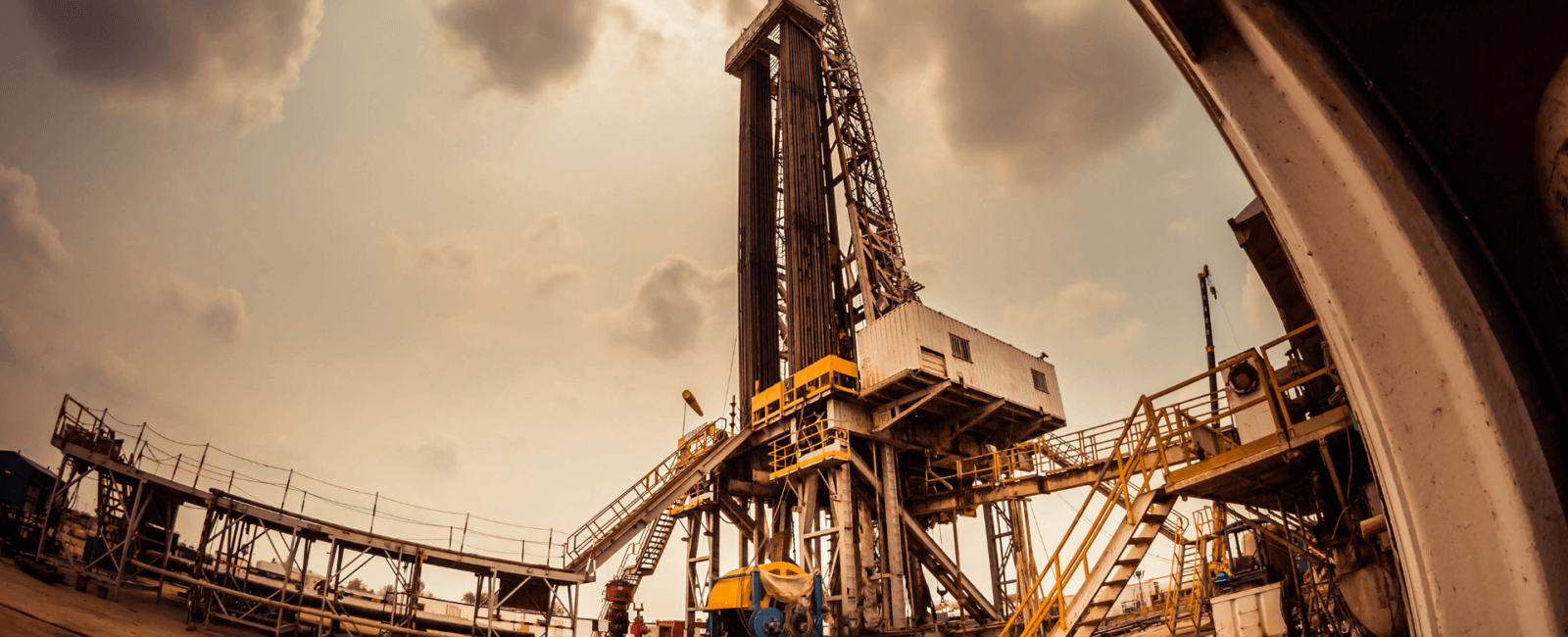
The state government of New Mexico in recent years has aggressively attacked one of the state’s most important industries—oil and gas production. Producing energy has become more difficult as bureaucrats influenced by so-called environmentalist organizations gain power.
The American consumer has paid the price of this battle in the energy sector through the rising costs of gas prices. In particular, the effects of these aggressive attacks have caused small oil and gas producers to take on numerous high expenses (passed onto consumers) that impact their ability to remain afloat. Not to mention they are now being forced to work under heavy-handed regulations that are designed to crush their business.

Now, hundreds of small operators and the thousands of employees they support are fighting back thanks in large part to the Independent Petroleum Association of New Mexico (IPANM). IPANM advocates for producers and helps operators navigate the complexities of drilling laws. Mountain States is here to help.
Case Background
In June of 2022, the New Mexico Environmental Improvement Board adopted severe regulations against the oil and gas sector under the guise of the state’s Air Quality Control Act. The public-facing goal of these regulations is to reduce pollutants that cause potential health concerns, called “ozone precursor pollutant emissions.” But how the Board wants to do this would crush small businesses and raise the price of energy. It is unlawful, unscientific, and would set a dangerous precedent.
For the small energy producers who have been in energy production for generations, these regulations could undermine not only the state’s but the entire nation’s energy superiority.
According to the Energy Information Administration, New Mexico delivered half of all oil growth in the United States in 2022. Many IPANM members contribute to the state’s daily production of 1.6 million barrels—nearly 17% of all daily domestic production in the country. For New Mexico alone, oil and gas funds half of the state’s general fund.
One would think a government so dependent on an industry wouldn’t attack it so aggressively.
Part of the Fabric of New Mexico
IPANM members like the Harvard Petroleum Company have been working the land to make it a fruitful place for a long time. Started by the late Lee Harvard, now managed by his son Jeff, Harvard Petroleum embraces the independent, family-owned, and contributing spirit the industry is known for in New Mexico.

Oil and gas production in New Mexico is a family business, deeply engrained in the community. Lee himself was an active member of Roswell, volunteering at his church, donating to and serving on scholarship committees and community boards. His legacy is like those of so many other IPANM members—an industrious spirit that contributes to the betterment of fellow man.
The state government’s regulations are now jeopardizing their businesses and livelihoods while also hurting the average American consumer at the gas pumps.
Out of Bounds, Literally
New Mexico law states that the Environmental Improvement Board may only regulate specific counties that exceed the maximum ozone concentration limits. Only oil and gas operations in those specific counties may be regulated by the Board in the new ozone regulations, and not operations in other counties.
Many of the small business producers that are members of IPANM operate in counties that do not exceed the threshold, and thus are not subject to the Board’s harsh regulations as a matter of law. Despite the clear boundaries written by the people’s representatives into law, the Board is still attempting in its new “ozone precursor” regulations to impose more stringent rules on oil and gas production in counties it legally has no right to. In a spirit of hostility toward oil and gas—and the New Mexico consumer—the regulation will destroy an important part of this vital economic sector.
Anti-Science and Anti-Energy
The Board’s regulations are designed to hurt oil and gas businesses because of how unscientific it is. To understand why, keep two terms in mind: VOC and NOx—volatile organic compounds, and oxides of nitrogen. When we talk about ozone precursors, we’re really talking about VOCs and NOx.
Ozone is formed in the atmosphere where these two precursors react in sunlight. Most NOx emissions in New Mexico are created by agriculture and traffic congestion.
Do you know what doesn’t create as much NOx? Small business oil and gas producers.
The Environmental Improvement Board’s regulations have almost no impact on lowering NOx, the chief problem for ozone in New Mexico. Instead, the regulation mostly targets VOCs. When IPANM came to the Board to highlight this problem, the regulators rejected their concerns. Why? Why would the bureaucrats not try and solve the real problem?
Because the Board wants to target oil and gas operations, which requires targeting VOCs instead of NOx. If New Mexico regulators were serious about fixing the problem, they’d do something about NOx in other areas of life, and not VOCs in oil and gas. Instead, the so-called environmentalists are hell-bent on destroying anything that even looks like oil and gas, regardless of whether the science supports their narrative.
The Board’s failure to consider the difference between VOCs and NOx in creating their regulation is the textbook definition of arbitrary and capricious. In the state of New Mexico, that’s illegal, and it’s where Mountain States Legal Foundation steps in.
Join the Fight
Since 1977, MSLF has fought to protect private property rights, individual liberties, and economic freedom. MSLF is a nonprofit public interest legal foundation. We represent clients pro bono and receive no government funding. Make your 100% tax deductible contribution today and join the fight.
What’s at Stake
If independent operators in New Mexico are to survive, then the Environmental Improvement Board must be reined in. It is as simple as that. If the Board has its way, those small business producers will have to close shop. The federal government is already making it impossible to begin any new energy production in the United States, and it shows at the gas pumps.
A gallon of gas two and a half years ago was only $2.39; that same gallon is now $3.88. That’s an estimated extra $75-$100 a month spent on gas. Everything you buy at any store is impacted by the cost of fuel for ships, tractors, trains, and trucks. The price of heating and cooling your home also skyrockets—for some Americans, the push to kill oil and gas means choosing between groceries and utilities.
The hatred so-called environmentalists have for oil and gas not only makes the basics of life more expensive for the average American and New Mexican, but it is also the heart of an anti-human sentiment.
IPANM and its members stand opposed to such a sentiment by providing a reliable stream of desperately needed energy. Unlike the Board, they are proud of the rich, bountiful resources our nation and New Mexico are endowed with, and work hard to support a prospering, flourishing, and happy society.
If the Environmental Improvement Board gets its way, it sends a signal to similar states that the only thing bureaucrats need to do to kill their state’s energy sector and undermine the people’s autonomy is to simply ignore science and their legislatures, give themselves power, and dictate costly regulations. Other states are looking to New Mexico, wondering how the Board’s regulation will play out.
If IPANM and Mountain States prevail, it sends a strong and clear message to the rest of the country—the rule of law demands that those who make the rules follow the law.
Case Timeline
- May 2021: The New Mexico Environment Department filed a petition with the New Mexico Environmental Improvement Board to adopt new air quality regulations to reduce ozone precursors. The Board began its rule-making process.
- June 2022: After more than a year of public comments and testimony objecting to the new regulation, the Board announced its final version of the regulation, threatening small oil and gas businesses in New Mexico.
- August 2023: Mountain States Legal Foundation and its co-counsel at the firm Montgomery & Andrews in New Mexico, on behalf of IPANM and its associate members, filed the opening brief in an appeal of the Board’s action, urging the New Mexico Court of Appeals to send the regulation back to the Board and require it to rewrite the regulation so that it complies with state law.
- November 2024: The New Mexico Court of Appeals upheld the State’s new Ozone Precursor (Methane) Rule, rejecting IPANM’s legal challenge. While IPANM generally supports the broader goal of reducing emissions, the State’s regulations must be lawful and reasonable. IPANM argued that the actions here were not lawful nor reasonable, and that they disproportionately harm small, family-owned producers and other independent producers in New Mexico. While IPANM considers its litigation options, we at Mountain States share IPANM’s disappointment in this result.