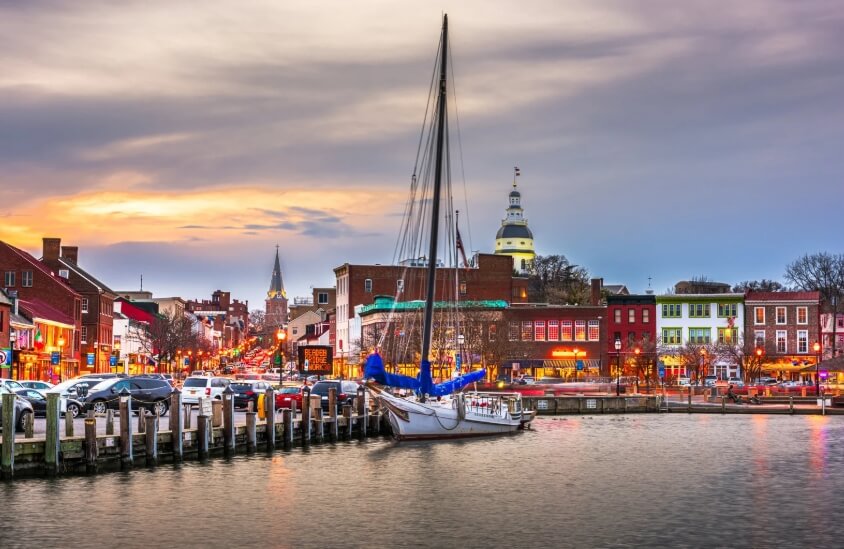
In two high-profile lawsuits, the cities of Baltimore and Annapolis are suing some of the world’s largest energy companies. Their claim? That global climate change has caused local harms and that energy companies should be held financially responsible under Maryland tort law.
But there’s a deeper issue here. These lawsuits aren’t about creating new laws or regulations through the normal democratic process. Instead, they try to use the courts to force energy producers to pay billions of dollars by claiming they’re legally liable under state tort law—a legal system designed for personal and property harm, not global climate issues.
The cities argue that traditional tort doctrines like “public nuisance” and “misrepresentation” can be stretched to cover global greenhouse gas emissions. But what they are really doing is trying to sidestep Congress and federal agencies to impose their own version of climate accountability and raise funds for their own local priorities in the process.
Join the Fight
Since 1977, MSLF has fought to protect private property rights, individual liberties, and economic freedom. MSLF is a nonprofit public interest legal foundation. We represent clients pro bono and receive no government funding. Make your 100% tax deductible contribution today and join the fight.
Baltimore and Annapolis want judges to hold global companies responsible for contributing to worldwide greenhouse gas emissions—a policy issue that U.S. lawmakers and international agreements already address. The U.S. Supreme Court has been clear: climate concerns are governed by federal law, especially the Clean Air Act. Congress decided that policy issues like the ones raised in this case should be resolved through national consideration, not through thousands of overlapping lawsuits in state courts.
This is not an isolated effort. Across the country, a growing number of local governments are filing “climate tort” and “climate cost recovery” lawsuits. The cases aim to use legal claims not for environmental concerns, but to convert legal claims into new revenue streams, often while facing budgetary pressures or political agendas to fund ambitious, irresponsible agendas. These cases are less about the law or good governance and more about the money.
That is why Mountain States Legal Foundation joined Professors Richard A. Epstein and John Yoo in filing an amici curiae brief urging the Maryland Supreme Court to affirm the dismissal of these cases. Together, we argue that state-law claims targeting global energy markets intrude on exclusive federal authority and misuse local tort law to achieve local outcomes that federal legislators and regulators have not adopted.
The argument is simple: federal law preempts state tort claims like these. The Clean Air Act creates a comprehensive, nationwide legal system for managing air emissions—including greenhouse gases. The Supreme Court has already ruled that this law replaces state-level lawsuits when it comes to pollution that crosses state or national borders.
Further, the lawsuits try to stretch and misuse traditional legal doctrines like public nuisance and consumer fraud beyond recognition. The cities do not allege that these companies misled them specifically, or that any Maryland resident relied on false statements. They simply look to hold energy producers liable for doing business in a legal, federally regulated marketplace. That would turn tort law, like state nuisance law, into a catch-all weapon for local governments with political agendas or big holes in their budgets. It would also give local courts the power to decide massive climate and energy policies. This is a power that the Constitution gives Congress.
At Mountain States Legal Foundation, we believe in limited, constitutional government, and that includes protecting the separation of powers, respecting representative democracy, and preserving the proper balance between local and national authority. If cities can use state law to further a money grab for funding local projects by complaining about national and international climate issues through bare allegations, then it sets a precedent that will ripple far beyond energy policy or Baltimore’s or Annapolis’s interests.
In our brief, we explain to the Maryland Supreme Court exactly why the local courts were correct to dismiss these cases. The Clean Air Act already governs air pollution and climate emissions. The U.S. Supreme Court has made clear that this comprehensive federal law preempts state and federal common-law claims involving alleged nationwide climate concerns.. That means these lawsuits aren’t just flawed—they’re blocked by federal law.
We are urging the Court to hold the line and prevent state tort law from being misused as a vehicle for sweeping, national change.
What’s At Stake?
If courts accept these claims, then cities and counties across the country will be emboldened to follow suit—not to solve climate change, but to collect payouts. And that threatens not just the energy sector, but the constitutional balance between federal and state authority.
These lawsuits try to turn public nuisance into a one-size-fits-all political tool. They risk transforming judges into unelected policymakers and sidestepping the democratic process entirely.
Mountain States Legal Foundation is urging the Maryland Supreme Court to reject this misuse of state law. Climate policy belongs to Congress. And courts must not become cash registers for political wish lists.
We are standing up for the rule of law, the separation of powers, and the principle that sweeping energy-policy decisions must come from Congress, not from the bench.
Case Timeline
- July 15, 2025: MSLF files amicus brief alongside Professors Richard A. Epstein and John Yoo.
- August 25, 2025: The Maryland Supreme Court scheduled oral argument for October 6, 2025.
- October 6, 2025: Maryland Supreme Court held oral argument.
- March 24, 2026: The Maryland Supreme Court upheld the lower courts’ dismissals of the local governments’ “climate tort” claims against the energy-producing defendants in the Maryland cases.