Does a court get to decide it knows better than Congress what is in the public’s interest? The D.C. Circuit Court seems to think so as they attempt to re-write statute to derail a key infrastructure project that would create economic growth for a remote community.
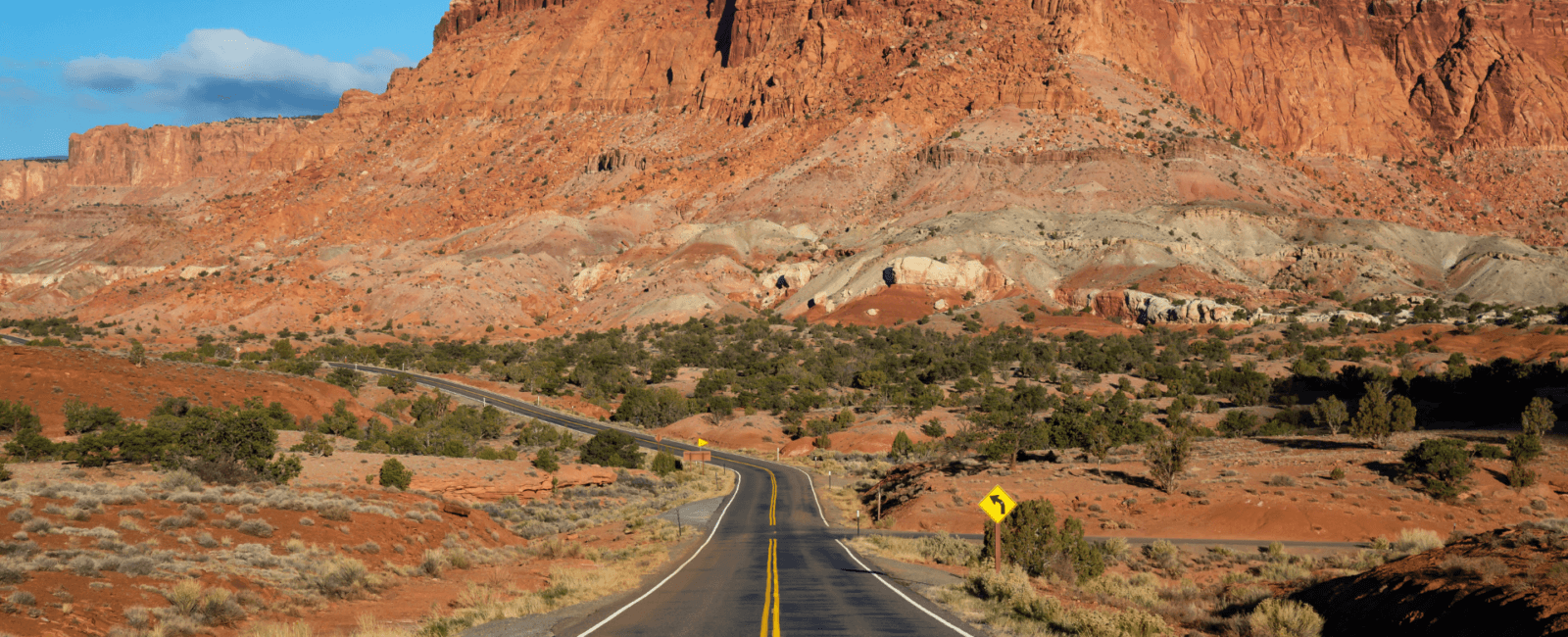
The Uinta Basin in Utah is a remote area that is home to untapped natural resources including minerals, natural gas, and crude oil. Agriculture also plays a role, with farmers and ranchers growing alfalfa, corn and raising cattle. A big challenge facing the local economy of the Uinta Basin, though, is the limited infrastructure available to transport its resources to the rest of the country and world. Those living in the region rely on two-lane roads through the mountain ranges and plateaus of the Western Rockies. This allows the Uinta Basin economy to survive but not truly thrive.
To grow the local economy, a coalition of seven Utah counties stepped up and decided to connect the Uinta Basin to the rest of the country by railroad. They would do this by building 88 miles of railroad track that would eventually reach the national rail network. This railway would allow goods to be imported and exported to the Uinta Basin.
The law requires the Uinta Basin Railway to get the green light from the federal Surface Transportation Board (STB). Within the STB, its Office of Environmental Analysis (OEA) evaluates the environmental aspects of proposed projects and reports to the board. According to the National Environmental Policy Act (NEPA), sometimes the OEA must offer a thorough Environmental Impact Statement before the STB can approve the railway’s construction.
One member of the Surface Transportation Board was concerned that with building the new railroad there was potential for increased transportation of oil produced from the Uinta Basin., This could, hypothetically, cause environmental consequences due to increased oil extraction, refinement, and transportation. The OEA released its findings in a detailed Environmental Impact Statement that expected there to be minor potential environmental consequences of more oil and gas production from the Basin. The OEA stopped short of giving an even more detailed quantitative analysis of such potential consequences over which they had no control.
During its review, OEA referred to a Supreme Court case called Department of Transportation v. Public Citizen from 2004. This case established that if a government agency lacks the authority to regulate certain industry actions resulting from its project approval directly, then it does not need to address those impacts under NEPA. STB reasonably thought that because it has no authority to regulate the actions of the oil and gas industry, then OEA was not required to go to extreme detail analyzing those theoretical consequences. The STB found the OAE’s environmental review satisfactory and approved the railroad’s construction.
Eagle County, CO, (whose largest city is Vail, nowhere near the Uinta Basin) and The Center for Biological Diversity (CBD), believed that OEA’s Environmental Impact Statement was inadequate under NEPA and argued that the STB followed the wrong interpretation of Public Citizen when it approved the project. The group also argued OEA’s environmental analysis did not take the proper “hard look” at the project’s potential environmental consequences, including the supposed impact of oil and gas drilling and completely hypothetical future greenhouse gas emissions. They decided to sue on this issue in the DC Circuit Court of Appeals.
Unfortunately, the D.C. Circuit Court of Appeals applied a much broader interpretation of Public Citizen. The Circuit Court held that if an agency does have the power to block a project, then its environmental review should include an extremely detailed analysis of those potential consequences regardless of its regulatory authority. It’s a viewpoint that would prevent any important project from ever getting necessary federal approvals. But in applying their viewpoint, the Circuit Court ruled that the STB failed to take a “hard look” at the environmental consequences of building the railroad.
The Circuit Court’s conclusion in this case is simply wrong. Congress has said clearly that building railroads like the proposed Uinta Basin Railroad is in the public interest. All an agency like the STB must do is pause and explain the environmental consequences that the agency can directly control. The Circuit Court wants the law to be different because it has its own idea of what is in the public interest—it believes it knows better than the elected members of Congress. STB did everything that was required by NEPA.
Join the Fight
Since 1977, MSLF has fought to protect private property rights, individual liberties, and economic freedom. MSLF is a nonprofit public interest legal foundation. We represent clients pro bono and receive no government funding. Make your 100% tax deductible contribution today and join the fight.
September 2024 Update
In late spring, Mountain States filed an amicus brief urging the Supreme Court to hear this case. We wrote on behalf of the American Forest Resource Council (AFRC), an entity whose members also suffer from overreaching applications of NEPA like the one the Circuit Court required here. AFRC helps its members navigate many of the legal issues involved with NEPA specifically in active forest management. If the Circuit Court’s interpretation of Public Citizen stands, it means a much longer NEPA review process and greater opportunity for courts to overstep their authority. In doing so, courts could write into law the environmental policy they think is in the public interest, regardless of what Congress has already directed. This means AFRC and its members would have more obstacles to navigate in an already heavily regulated industry.
Following briefing submitted in the Petition stage, the Supreme Court decided to hear the case on June 24, 2024. In response, Mountain State has expanded its involvement in the Seven County Infrastructure Coalition v. Eagle County, Colorado case by representing the AFRC and the Western Energy Alliance, whose members are also greatly impacted by the burdensome NEPA review process. In our merits brief, we continue to emphasize the core argument that the D.C. Circuit’s decision misapplies NEPA and conflicts with this Court’s precedent in Public Citizen.
We argue that NEPA does not require agencies to analyze impacts beyond their statutory authority to control, particularly when Congress has clearly expressed that certain activities, such as rail construction, are in the public interest. The brief highlights how the lower court’s expansive interpretation of NEPA threatens to paralyze a broad range of critical infrastructure and resource management activities, from energy development to forest management. By representing both AFRC and the Western Energy Alliance, MSLF brings to the Court’s attention the wide-ranging consequences of the D.C. Circuit’s decision across multiple sectors. We argue that the lower court’s approach transforms NEPA from a procedural statute into a de facto national energy and climate policy overseen by the courts, contrary to congressional intent. The brief emphasizes the need for the Court to restore NEPA to its proper role as a tool for informed agency decision-making within existing statutory constraints, rather than a means for imposing substantive outcomes through litigation.
This case provides AFRC, Western Energy Alliance, and Mountain States with an opportunity to comment on the NEPA process and ensure that its requirements align with Congress’s intent. It also allows us to hold the courts accountable for ruling consistent with Congressional requirements.
What’s at Stake?
For the people who live in the Uinta Basin, this case is more than a railroad; it is their livelihood and a key to their prosperity. The railroad stands as an opportunity for the Uinta Basin to expand its economy and make the area more accessible for its businesses and residents. For the rest of us, this case is about the preservation of the checks and balances of government. We must ensure that government overreach from any branch, judicial or otherwise is not tolerated. If the Circuit Court’s ruling stands, we will see even longer processing times under the NEPA review process and an undue burden on agencies to cover topics in their environmental reviews that they will not be able to regulate, much less analyze in extreme detail. All NEPA requires is a reasonable explanation, and that is what the OEA provided to the STB. Mountain States believes that is all they should need to provide.
Case Timeline
- March 2024: Petition for a writ of certiorari filed.
- April 2024: Mountain States and American Forest Resource Council filed amicus brief.
- June 2024: Supreme Court granted the petition for writ of certiorari.
- September 2024: Mountain States filed an amicus brief on the merits to the Supreme Court.
- May 2025: The Supreme Court issued its opinion, promising to significantly alter the scope of judicial review of environmental reviews performed under the National Environmental Policy Act (NEPA).
